


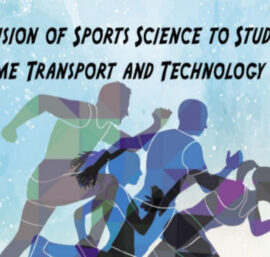
This book was written because I became convinced—through years of teaching, working with students, and observing the realities of maritime education—that physical education in maritime colleges was being treated as a secondary subject, when in fact it should be considered a strategic pillar. New Vision of Sports Science for Students of Maritime Transport and Technology…
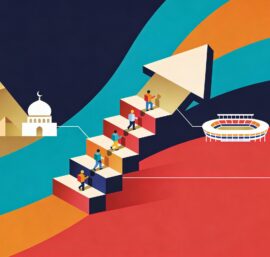
Arab sport has never lacked passion. It has never lacked talent. What it has often lacked is an integrated, long-term development vision that connects participation, health, elite performance, governance, investment, and culture into one coherent system. That is why I prepared this work: a “future vision” for Arab sports development—presented not as wishes, but as…

Investment in sport does not start with money. It starts with trust. And trust is not created by slogans, famous names, or temporary success. Trust is created by governance: clear rules, accountability, transparency, and professional control over both financial and administrative performance. This is the belief that pushed me to write my scientific paper, “The…
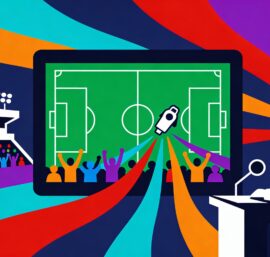
For many people, sport is ninety minutes of emotion—joy, anger, pride, disappointment. For disabled people, it can be all of that and something deeper: a gateway to health, dignity, and social belonging in a world that too often pushes them to the margins. For me, sport has never been just a match; it has always…

Every sports institution has a visible face—teams, competitions, achievements, and public presence. But behind that face there is an invisible backbone: the organizational structure. When the structure is outdated, even talented people struggle. Decisions slow down. Roles overlap. Accountability fades. And strategic goals become slogans rather than outcomes. This is exactly why I wrote the…

When people think about maritime transport, they usually picture ships, cargo, ports, and global trade routes. But behind every safe voyage there is a human being—often working long shifts, living under pressure, and trying to stay alert in an environment where one mistake can cost lives, money, and the environment. I wrote this scientific paper…

Sports can bring out the best in people—belonging, pride, shared joy. But they can also trigger the worst: aggression, blind fanaticism, and collective anger that turns a match into a battlefield. Over time, I became convinced that violence in sport is not only a security problem. It is also a communication problem. The way sport…
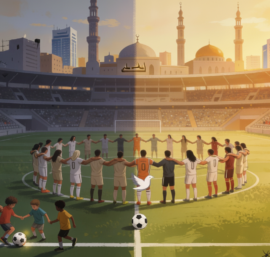
In the Arab region, conflict is not only a headline—it is a lived reality that shapes families, economies, identities, and futures. For a long time, many people treated sport as entertainment separated from politics and society. But I have never believed that sport is neutral. Sport is a social institution: it can intensify division, or…

Sports institutions are living in a time where stability is no longer stable. The external environment changes quickly—technology, fan behavior, sponsorship models, regulations, crises, and even global events that can stop competitions overnight. In that reality, the question is not only “Who is the strongest today?” but “Who can adapt tomorrow?” That is why I…

For many years, sports institutions in our region treated marketing as a seasonal activity: announcements, banners, a few sponsorship conversations, and then silence until the next competition or membership cycle. But the world has changed. The audience has changed. And the decision-making logic inside sport has changed as well. If a sports institution wants to…