



For many years, I have stood at the intersection of theory and practice—teaching, researching, organizing, observing, and sometimes correcting what goes on behind the scenes of sports events and institutional occasions. While audiences often remember the opening ceremony, the final match, or the closing applause, I have always been more interested in what happens before the lights turn on and after they turn off. That hidden world of planning, coordination, decision-making, and evaluation is where success or failure is truly shaped.
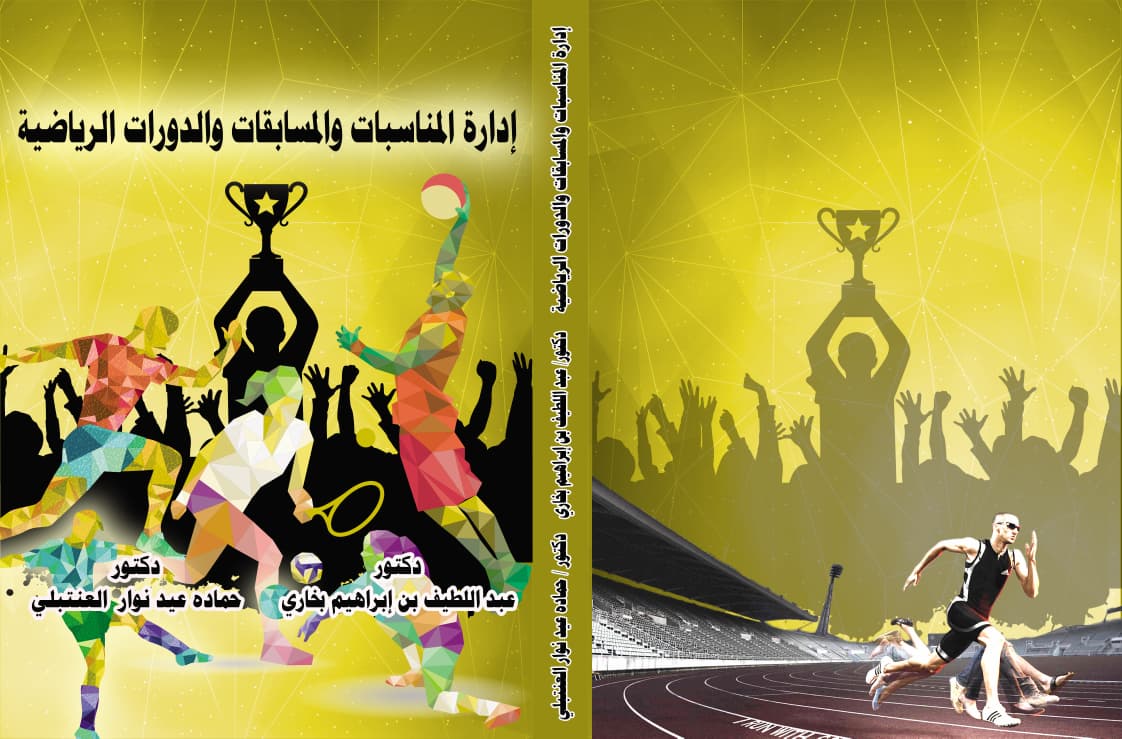
This conviction is what led me to co-author Event Management, Competitions, and Sports Tournaments. The book is not merely an academic contribution; it is the result of lived experience, accumulated observations, and a strong belief that events—especially sports events—must be managed scientifically if they are to fulfill their social, educational, and economic roles.
The question that accompanied me throughout my professional journey was simple yet persistent:
Why do so many events fail despite good intentions, sufficient funding, and talented people?
I witnessed sports tournaments that suffered from organizational chaos, academic conferences whose content was strong but whose management weakened their impact, and institutional celebrations that consumed significant resources without leaving a meaningful legacy. Over time, I realized that the issue was not a lack of enthusiasm, but rather the absence of a systematic management framework.
Event management was often treated as an ad-hoc task rather than a specialized discipline. This gap—between what events could achieve and how they were actually managed—became the driving force behind this book.
Writing this book required me to balance two worlds. On one hand, there is the academic responsibility to ground every concept in scientific literature, models, and validated methodologies. On the other hand, there is the practical obligation to ensure that what is written can actually be implemented by administrators, organizers, students, and practitioners.
I did not want to produce a book that remained confined to university libraries. I wanted a reference that could sit on the desk of an event manager, a sports federation official, a university administrator, or a graduate student preparing for real-world challenges.
For this reason, the book moves deliberately from conceptual foundations to applied models. It discusses the historical development of sports competitions, the evolution of event management as a profession, and then proceeds to concrete topics such as marketing, sponsorship, information technology, risk management, and post-event evaluation.
One of the central ideas I emphasize throughout the book is that an event is not a moment in time—it is a system. It begins long before the audience arrives and continues long after the venue is cleared.
This is why the book dedicates significant attention to the three essential phases of event management:
Pre-event planning, where objectives are defined, resources allocated, risks anticipated, and responsibilities clarified.
Event execution, where coordination, communication, and real-time decision-making determine the quality of delivery.
Post-event evaluation, which is too often neglected, yet remains the most valuable phase for institutional learning and improvement.
By framing events as systems rather than occasions, I hoped to change how institutions perceive their responsibilities—not as temporary organizers, but as long-term builders of reputation and credibility.
Another major motivation behind the book was the growing role of information technology in event management. While many industries have embraced digital transformation, event management in our region has often lagged behind.
The book addresses how technology can support:
Planning and scheduling
Coordination among teams
Marketing and promotion
Financial control
Performance monitoring and evaluation
My goal was not to promote technology for its own sake, but to demonstrate how it can reduce human error, improve transparency, and enhance the experience for both organizers and participants.
One of the most misunderstood aspects of event management is marketing. Too often, it is limited to promotion, while its strategic dimension is ignored. In reality, effective marketing determines whether an event can achieve sustainability, attract sponsors, and create long-term value.
In the book, I devoted an entire section to sports event marketing and sponsorship management, addressing market analysis, audience expectations, pricing strategies, and relationship building with sponsors. These are not theoretical luxuries; they are essential tools for institutions seeking independence and growth.
While the book has an academic structure, it was written for people, not for disciplines. It speaks to:
Sports administrators and federation officials
Event organizers and project managers
University and school administrators
Researchers and graduate students
Policymakers involved in youth, sports, and cultural development
What unites these readers is a shared responsibility for managing events that represent institutions, values, and communities.
Perhaps the most rewarding aspect of this work has been seeing its ideas reflected in practice. I have encountered students who approached event planning with greater confidence, institutions that revised their organizational structures, and professionals who began to view evaluation not as criticism but as a pathway to improvement.
The book does not claim to provide perfect solutions. Rather, it offers a framework for thinking, a scientific lens through which events can be planned, executed, and assessed more responsibly.
Looking back, writing this book was not just an academic project—it was an act of professional accountability. I felt a responsibility to document what experience had taught me, to transform lessons learned into structured knowledge, and to contribute to a field that plays a vital role in education, sports, and public life.
If this book succeeds in helping even one institution avoid failure, improve performance, or deliver a more meaningful event, then it has fulfilled its purpose.
Events shape memories, reputations, and futures. Managing them well is not optional—it is a duty.
