


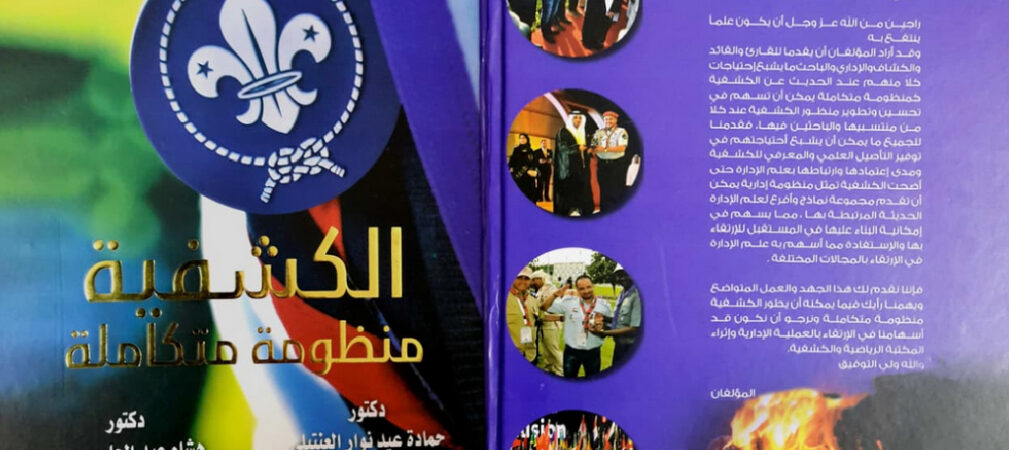
These books were written because Scouting, in my experience, is often misunderstood: some see it only as camping and uniforms, while others reduce it to ceremonies and slogans. I wanted to document—academically and practically—that Scouting is both a complete educational movement that develops the individual from childhood and a management system with clear administrative processes, leadership practices, and institutional tools. Later, I expanded the project with a second volume because I also wanted to preserve the “living heart” of Scouting: its traditions, arts, and skills that shape behavior and identity and make it truly a way of life.
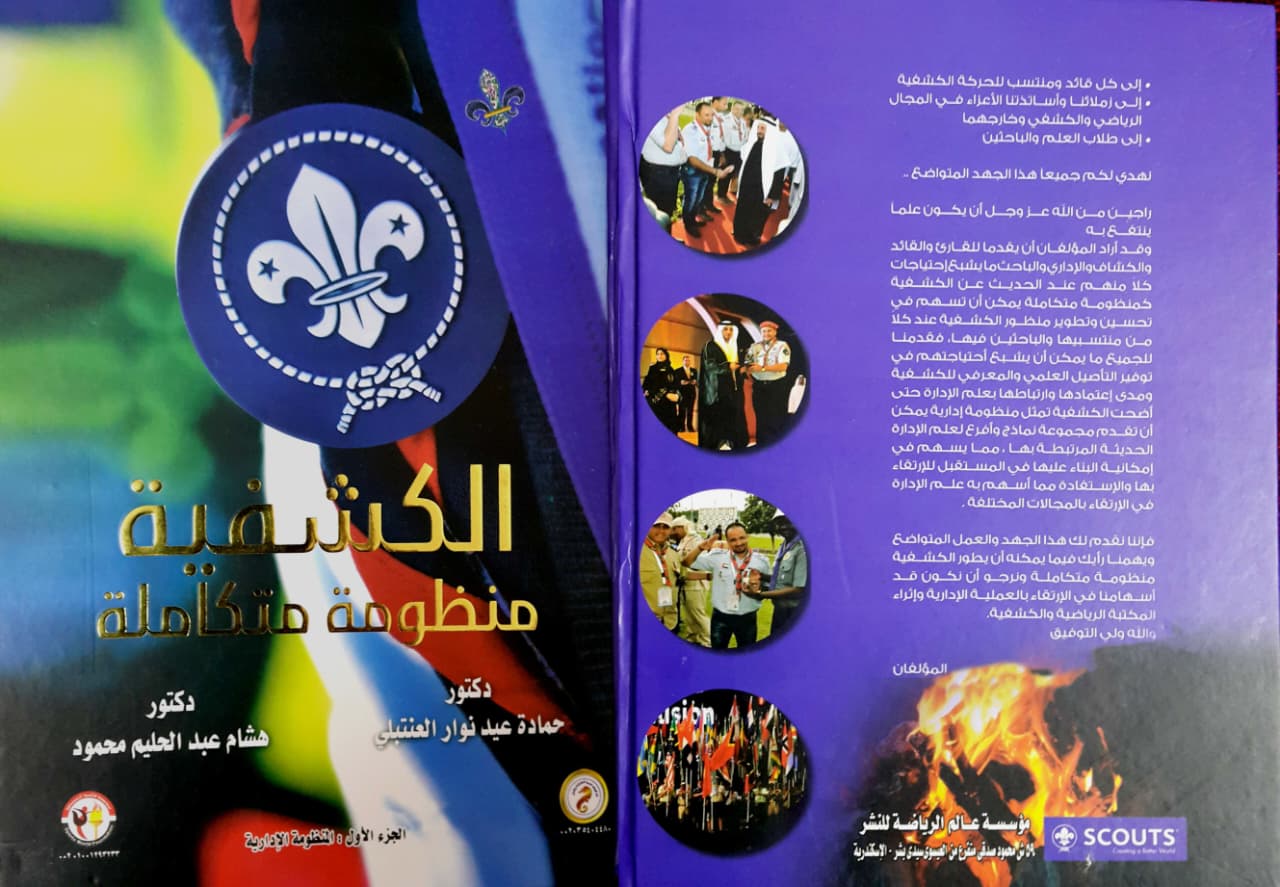
When I wrote the first book in 2013 with my colleague Dr. Hisham Abdel Halim Mahmoud, the world was already passing through a transitional phase with political and economic challenges that demanded institutions—and people—to adapt. In that context, Scouting and Guiding stand out as educational movements that prepare individuals from an early age through developed programs and curricula, aiming to shape the good citizen with balanced growth across behavioral dimensions. That sentence may sound “academic,” but it reflects something very human: society always needs young people who can stand steady in change, not collapse under it.
Over time, I noticed a gap. Many leaders and participants inside Scouting practice great work, but they do not always have a written, systematic reference that connects what they do to modern management science, or explains Scouting as an administrative system that can be studied, improved, and replicated. So the decision to write was not simply “to publish a book”—it was a response to a real need among leaders, scouts, administrators, cubs, researchers, and even beginners who ask: Why do we do what we do? and How do we do it better?
The deeper personal reason was my belief that Scouting is not only an activity program; it is a formative experience. It grows confidence, discipline, service spirit, and the ability to live responsibly with others. And when a movement carries that much educational potential, it deserves strong documentation and an approach that respects both science and practice.
The first volume—Scouting… An Integrated Administrative System (2013)—was designed to show that Scouting is deeply connected to the science of management and can present models aligned with modern administrative thought. In the introduction, we stated clearly that the goal was to provide scientific and knowledge-based grounding for Scouting, and to demonstrate how it operates as a complete administrative system that can be built upon to elevate the movement further.
That is why the book is structured in nine integrated chapters. It starts with a comprehensive entry to Scouting: origins, founder, global and Arab history, constitution, concept, goals, principles, stages, program, method, traditions, and the role of Scouting in society. Then it moves to what many do not expect from a Scouting book: administration as a real operational system—planning, organization, direction, control, and evaluation.
We also dedicated chapters to areas that decide whether any organization succeeds or fails, including:
Decision-making for the scout leader (concept, importance, types, principles, steps, and application inside scout organizations).
Managing scout meetings, with practical templates for minutes and reports because administration is not theory; it is documentation and follow-up.
Time management for leaders, because voluntary work collapses when time is wasted.
Crisis management in Scouting, including concepts, characteristics, causes, leadership roles, scenarios, communication tools, and planning for crises.
Administrative development for leaders (selection, motivation, administrative training), and then Scouting media and public relations, because Scouting does not operate in isolation—it serves society and must communicate effectively.
If there is one idea I hoped the reader would leave with, it is this: Scouting is not “less serious” because it is voluntary; it must be more serious, because it carries responsibility for youth development and community service.
Years later, a second reality became clear: a management-focused presentation alone is not enough to capture the full meaning of Scouting. Scouting is practiced through traditions, symbols, skills, outdoor life, and a distinct culture that leaves visible marks on a person’s behavior and personality. In the introduction of the second volume, we stated that it is easy to notice whether someone has been part of Scouting through their discipline, self-reliance, leadership traits, and ability to adapt under different conditions—especially through applying outdoor life principles and Scouting skills and through the honest desire to serve society.
This was the motivation behind Scouting Is a Way of Life: Arts… Traditions… Skills—the second volume of the “Scouting: An Integrated System” series. It frames Scouting as a lifelong pathway: a child enters as a young member, then progresses through stages until reaching rovers, then leadership roles through leadership qualification levels, and even veteran stages. This continuity is what makes Scouting deeply rooted and not a temporary hobby.
The book also links Scouting more recently to global sustainable development goals, reflecting how modern Scouting is increasingly asked to prove its relevance and impact in contemporary development agendas.
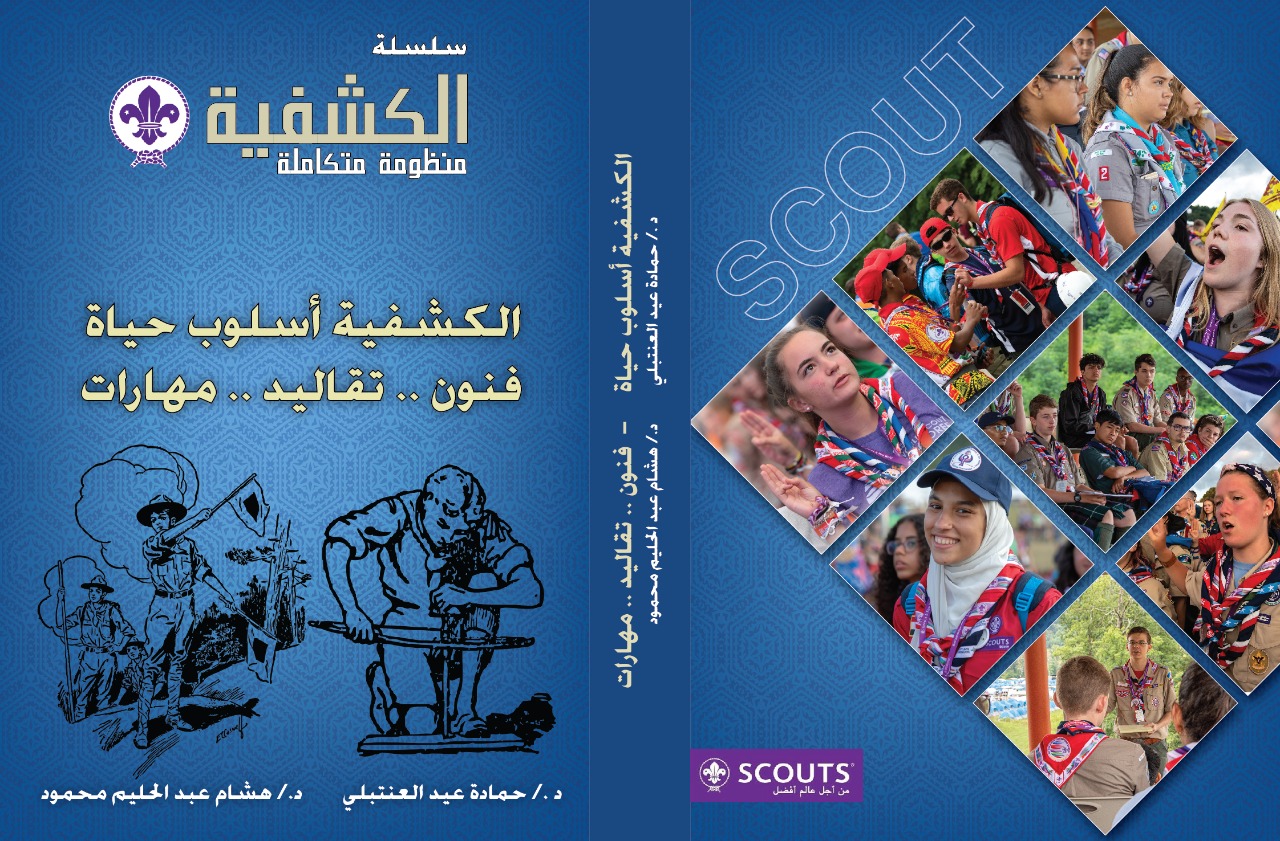
The second volume is built around seven chapters that focus on the lived practice of Scouting, not only its administration. It begins with Scouting traditions—starting from the uniform, to ceremonies, gatherings, and practices that a scout must learn and respect. Then it moves to outdoor life skills and arts, emphasizing the practical competencies that support daily life and shape the scout’s character and distinctiveness.
It also covers:
Building and registering the scout troop, as the foundational unit locally and globally.
Volunteering as a core principle of Scouting, including challenges such as competition with other volunteer organizations, leadership dropout, and methods to support retention and renew Scouting tools and concepts.
Scout curricula linked to age stages, and the importance of cooperative learning as a lasting learning approach.
Leadership development policy to ensure the sustainability of Scouting work through training leaders and “leaders of leaders.”
The core requirements for organizing and hosting the World Scout Jamboree, with a specific hope that one day an Arab country could host such a global event as a statement of presence and influence.
These books were written for every leader and member of the Scout movement, for our families, for colleagues in the sports and scouting fields, and for students and researchers. Practically, they are meant to support several groups:
Scout leaders and administrators: by giving them structured management tools (planning, meetings, time, crises) and a language to explain their work professionally.
Scouts of different ages: by presenting Scouting as a developmental pathway that shapes personality through values, traditions, and skills, not only activities.
Researchers and educators: by offering material that connects Scouting to management science and educational development in a way that can be extended and studied.
Institutions and community partners: by showing that Scouting is an organized system capable of delivering community service, structured volunteering, and long-term youth development.
My hope for impact was—and still is—that these books help shift the perception of Scouting in our region: from “nice activities” to an integrated educational and administrative movement that can contribute to national development, community resilience, and leadership building.
In both volumes, the closing message is similar: this is a modest effort, and the reader’s feedback matters, because improvement is not done alone. I also hold tightly to the ethical principle we quoted: excellence in work is a form of responsibility. If Scouting teaches anything at its core, it teaches that values become real only when they turn into disciplined action.
