



When I began my academic and professional journey many years ago, I did not imagine that the concept of quality would become the central thread connecting my work as a researcher, educator, and practitioner. Yet with time, experience, and deep engagement with institutions and people, I came to realize that quality is not a technical term confined to manuals or standards—it is a way of thinking, a way of acting, and ultimately, a way of living.
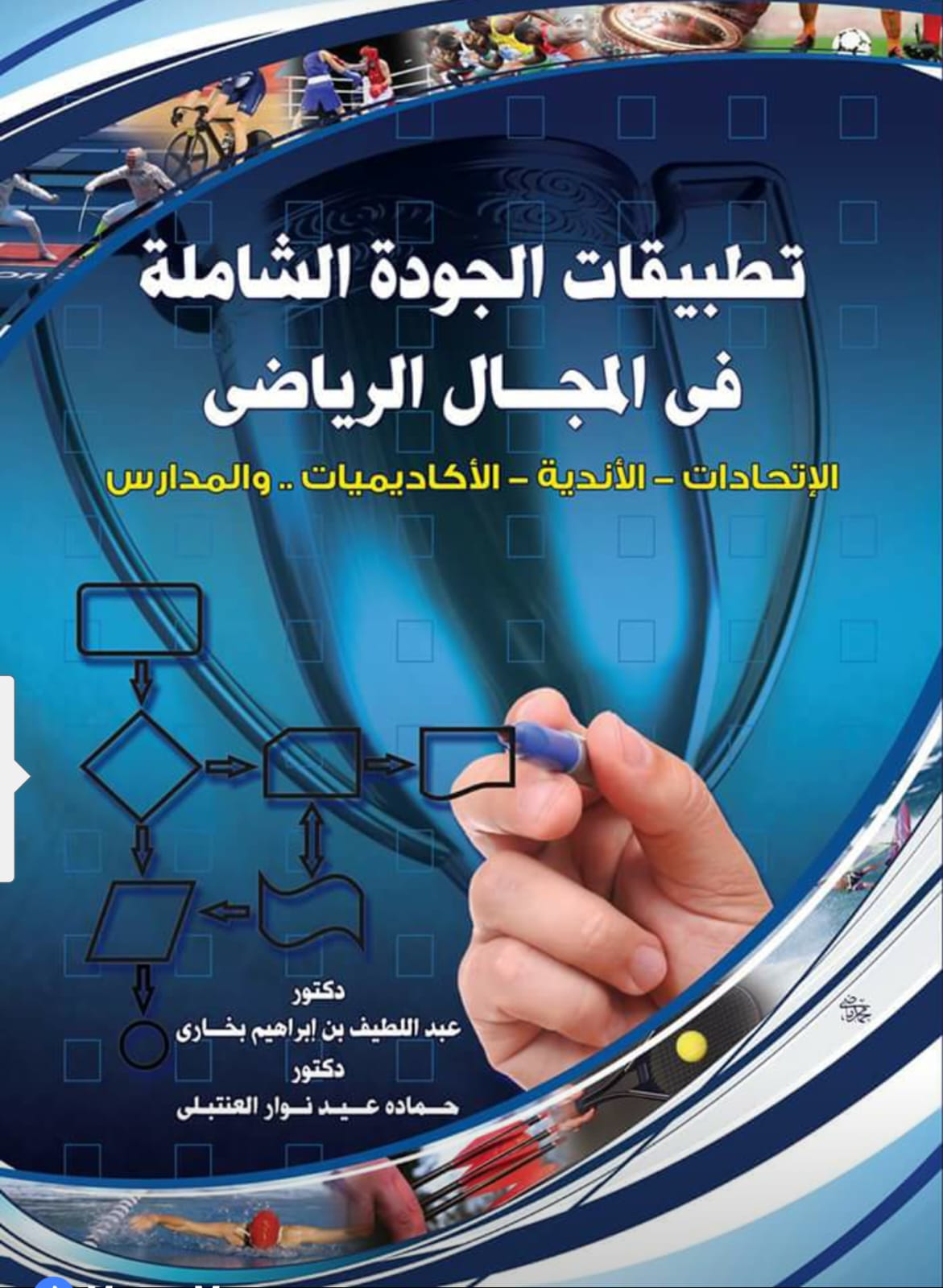
This realization is what led me, together with my esteemed colleague Prof. Dr. Abdul Latif bin Ibrahim Bukhari, to write Applications of Total Quality Management in the Sports Field. This book was not written to add another title to a shelf, but to respond to a real need that I witnessed repeatedly in sports organizations, educational institutions, and administrative systems across our region.
We live in a world characterized by rapid change, intense competition, and increasing expectations from stakeholders. Institutions—whether sports clubs, federations, schools, or service organizations—are no longer evaluated solely by what they offer, but by how they offer it, how efficiently they operate, and how sustainably they improve.
In the sports sector especially, I observed a recurring gap. While athletic performance often receives great attention, administrative performance is frequently treated as secondary. However, my experience taught me that no sporting success can be sustained without a strong, scientifically grounded administrative system. Talent alone is not enough; excellence requires structure, leadership, planning, evaluation, and continuous improvement.
This book emerged from that conviction: that Total Quality Management (TQM) is not a luxury or a theoretical framework detached from reality, but a practical and necessary approach for institutions that aspire to progress.
Writing this book was both an academic responsibility and a personal journey. It required revisiting foundational theories of quality, studying the contributions of pioneers such as Deming, Juran, Crosby, and others, and—most importantly—translating these concepts into a language and methodology that serve the sports field and educational institutions in our context.
Throughout the writing process, I continuously asked myself a simple but demanding question:
How can this knowledge genuinely help administrators, coaches, teachers, and decision-makers improve their daily practices?
This question shaped the structure of the book. Rather than stopping at definitions and historical overviews, we focused on applications, models, and proposed frameworks that can be implemented in real institutions with real constraints.
The book is built around seven integrated chapters, each designed to move the reader from understanding to application:
We begin by tracing the historical and philosophical roots of quality, emphasizing that quality is deeply embedded in human civilization and ethical systems.
We then explore the dimensions, principles, and philosophy of Total Quality Management, clarifying its relevance to sports and service institutions.
A full chapter is devoted to the components, stages, and systems required for successful implementation, including common obstacles that organizations face.
The book presents a comprehensive methodology for applying TQM, adaptable to sports organizations, clubs, and service institutions alike.
Practical proposed models are offered for improving administrative performance in sports clubs, developing marketing information systems, and enhancing school management—because true sports development begins in education.
Each chapter was written with the practitioner in mind, not only the academic reader. My intention was that every reader—regardless of their position—could find guidance relevant to their role.
Since its publication, the book has been used by students, researchers, administrators, and educators. What has mattered most to me is not citations or formal recognition, but the feedback from those who applied its ideas in practice.
I have seen institutions begin to rethink their internal processes, leaders shift from control-based management to participatory leadership, and administrators recognize that improvement is not a one-time project but a continuous cycle. In educational contexts, the book has helped highlight the critical link between school administration and long-term sports development.
At the individual level, many readers have told me that the book changed how they view their roles—not as task executors, but as contributors to a system whose quality depends on collective commitment.
One of the central messages I emphasize throughout the book is that quality is not synonymous with ISO certification or formal procedures. While standards are important, true quality begins with culture—with values such as responsibility, transparency, teamwork, and respect for human potential.
Total Quality Management, as I understand and present it, is fundamentally human. It recognizes that most errors originate from systems, not individuals, and that improvement comes through education, trust, and shared vision. This perspective is especially vital in sports and educational institutions, where human development is at the core of the mission.
This book represents a stage in an ongoing journey, not a final destination. The challenges facing our institutions continue to evolve, and so must our methods of management and leadership. I hope that this work encourages readers to question existing practices, adopt scientific approaches, and commit to continuous improvement.
Above all, I hope it reminds us that excellence is not accidental. As our faith and our ethics teach us, perfection in work is an act of responsibility—toward our institutions, our communities, and future generations.
I remain deeply grateful to every reader who has engaged with this book, applied its ideas, or even challenged its perspectives. It is through such engagement that knowledge remains alive and meaningful.
